Episode Transcript
Frank Hereda (00:02.478)
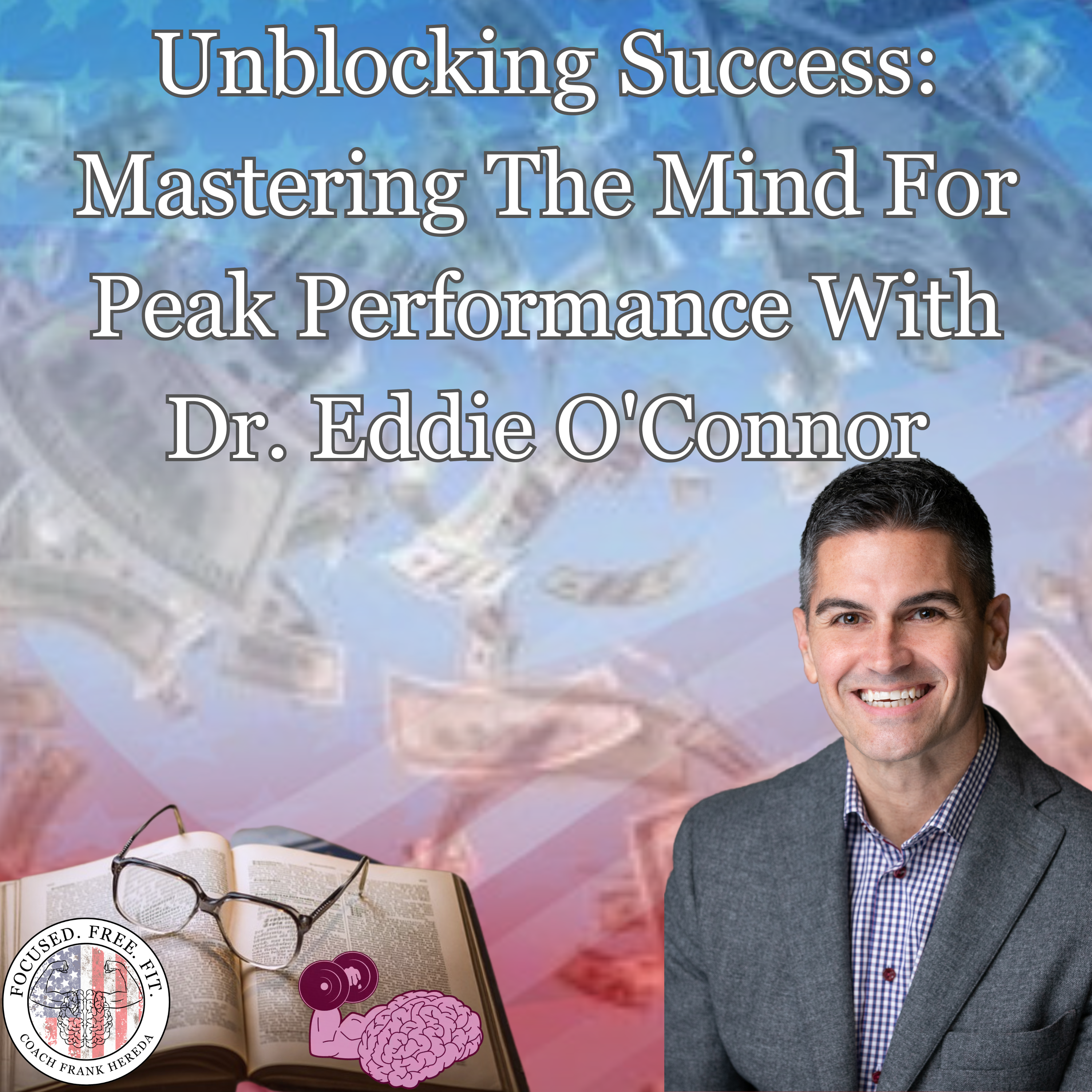
All right. So, uh, welcome everybody to another episode of focused free fit. Today we have a special guest, Dr. Eddie O 'Connor, and, um, I'm excited for this conversation today because I love sports, uh, not as, as much as some, I don't watch as much as some of you out there, but I do love sports, played sports, and I'm really excited to hear his take on how. About psychology really, but, um, I'm going to let him.
Introduce all of you to his background and what he does and then we'll get started. So Dr. O 'Connor, welcome. And why don't you tell everybody for those who don't know who you are, tell us about your past and kind of, you know, give us an idea of how you got to where you are today. I'd love to hear about it. And I know everybody else would too.
Dr Eddie O'Connor, CMPC (00:39.18)
That was nice.
Dr Eddie O'Connor, CMPC (00:49.868)
Sure. I'll keep it relatively brief so we can get into the weeds of how to help the people who are listening. But I always loved psychology. I grew up in the Bronx, actually, and that's a rough place. You get into fights. But I knew even in elementary school, people that I would fight with would still come to me when they had problems. So I remember being in fifth grade and walking in the playground and helping people with their issues. And then we'd be in a fist fight four weeks later. But...
Frank Hereda (00:55.342)
Yeah.
Frank Hereda (01:17.422)
Hehehehe.
Dr Eddie O'Connor, CMPC (01:17.644)
Anyway, so psychology was always something I wanted to do. I read Freud as a kid for fun. So I always wanted to do that. But I was also an athlete. And long story short, I got into a mental block that kept me from running my best. It was in track, but I couldn't get past it. And it was really frustrating because I practiced hard. But the short story of that is that my identity was really wrapped up in what I was doing and it was holding me back because it was too much pressure to perform. It didn't let me give my full effort through the fear of failure. And...
So I didn't know sports psych was a thing until it was the last class I took in college. So I knew I wanted to go into psychology, but when I found out this was a thing, I was like, oh my gosh, I really want to do that. So I continued and became a clinical psychologist, but I wanted to study what athletes and other high performers would suffer from the most. So I did get my clinical degree, but then specialized in injury and rehabilitation. And then most recently, last five to 10 years, I was really doing a lot with performance anxiety, which is what I had had when I was growing up. Again, too much.
of identity being wrapped up in it. Short story is, you know, these things needed to be what I did, not a measure of my worth. And so then I became a sports psychologist in the sense of helping people who are doing fine, develop mental toughness, the ability to be better and more consistent, their opponents are remaining determined, focused, confident and in control under pressure. But then if they get into a slump or if they're really struggling, I'm also to kind of use my clinical background to help them overcome those obstacles to excellence.
the stress, the perfectionism, I do a lot of that. And I know that these are topics that I really want to say is that I just don't work with athletes. I work with high performers because while sport is a context, I've also applied this to health, people with pain and obesity. And I've helped certainly entrepreneurs and businessmen and women because there's pressure in trying to do that as well. There's a lot of failure that you have to learn how to deal with if you're going to succeed, as well as performing artists and musicians and things of that nature. So I've...
I've loved that. I guess I'll take a pause there because otherwise I'll just keep rambling.
Frank Hereda (03:20.558)
There's a lot of good stuff you said there. Um, and wow, there's so many questions I have. So let me ask you, I think it's really interesting what you said. You said that your pressure was the fear of, well, it was the pressure was your block, but it was fear of failure. So my, I'm curious. Do you think that that was something that was natural that was just in you and you find that with most people that you, you help, or was it parents or a coach?
and the pressure they put on you that led to, and the way they did coach or the way they did parent that led you to have that fear of failure, or is that something you just put on yourself? And do you find that that's also what most people do when you talk to them?
Dr Eddie O'Connor, CMPC (04:02.732)
Yeah, so great question. What I found is that everybody to some degree, and so maybe not everybody should, but everybody's got something, I'll say that much. But this idea that I'm not good enough, I have found there's some version of it in almost every human being. And what's interesting is that no matter what background people have, we still come to it. So you might think, well, what coaches did that? And sometimes that happens. So what parents? And that can certainly happen. But my coaches were kind and my parents were,
among the best I've ever seen and not putting expectations on me, but supporting me. Like I had no idea what they wanted me to do in my life. You know, so I can completely own my career because they created this safe space where they just believed in me and let me do it. So it's interesting, like, well, why would I think I wasn't good enough? Because I had all this positive reinforcement. And for a lot of my athletes, what it came out from is because, well, I kind of saw that the way to get known in the world is by being good. I mean, you look at ESPN, they don't celebrate the, you know, the 10 best people of the week.
they celebrate the best plays. And we get raises when we do well at our job. We win awards, we're constantly competing, sport in particular. We celebrate successes and we should. There's nothing wrong with that, period. There's nothing wrong with it. So for me, just kind of finding out that as you go in, everybody has a need to belong and you'll have your own insecurities. You wanna be loved, you don't wanna be abandoned. There's these flavors that we have because...
The world is a difficult place and we experience pain when we're children. Whether there's a real abandonment, like there's maybe a divorce in the family or there's a parent that disappears or dies, or it's just a matter of I'm a kid and I'm selfish and I don't think my parents are paying enough attention to me. And so I got to do more to get their attention. Again, nothing's wrong with that. It's just that we're selfish human beings. And so for me, I learned that, yeah, it's really good. Here's a good story.
I'm a sports psychologist, so I'm raising my kids, my oldest son. We're in the back and we're playing soccer and I'm just teaching him to focus on the process. It's a big performance thing is that while you have the outcomes, you really gotta keep dialing down to the process. So I'm not celebrating his goals or this or that. And again, he's like seven, this is young. So he has his first soccer game and we go out there and somebody passes the ball, he kicks it, it happens to go in first game of the season. And what happens? Everybody erupts. He's terrified because he's like, what the hell is going on?
Dr Eddie O'Connor, CMPC (06:28.972)
Like, and the kids are running up, everybody's cheering, and he's at first startle, but then he's immediately addicted. I see that the net, you know, soon after that, he leans over to the kid and he goes, let's do that again. Right now, here's the thing, like, when he was scoring in my backyard, like, I didn't say anything, I just complimented the process, because I'm raising him well. But now he's automatically got this. So then what happens? Five minutes later, they go, he gets another chance, and it goes way off, out of bounds, like, misses the net by like a mile. And then what does everybody do? Oh.
Frank Hereda (06:29.742)
Yep.
Frank Hereda (06:38.67)
Yeah.
Frank Hereda (06:56.654)
Yep. Yeah, yeah, yeah. But it's not nothing compared to what he had. Yeah.
Dr Eddie O'Connor, CMPC (06:57.132)
Nobody's beating the kid up. Nobody's parents are like, oh, we're disappointed. And then we take a sip of coffee and we laugh and we move on. But what did my child learn? Like everybody. When you do well, you reward, there's a lot of attention, people like you, when you make a mistake, I disappoint the people that matter most to me. I don't want to do that again. Now, he didn't have any pathologies that came out, but I'm just saying we have those examples in our life all the time. Success is rewarded. So...
Frank Hereda (07:07.95)
Make the, but make, make the goal.
Dr Eddie O'Connor, CMPC (07:27.116)
long answer to your short question, but it's a good one. How do people get there? Is it something they do themselves? I think it's just a part of being human. And that doesn't mean that you just accept it and move on. It means that this is a challenge that all of you out there really have to deal with. You're going to have these insecurities and there's nothing wrong with you is what I want to tell you. As a psychologist, I'm telling you that there's not a problem. Everybody has that. The difference is how do we respond to this anxiety or this fear or this anger?
or this sadness when it shows up. It's not the presence of these emotions, but how we choose to interact with them that really psychology is moving into. And it's kind of where I differ from my colleagues too. My catchphrase is overcome the obstacles to excellence. You might all be about, I have to think positive and feel confident so that I can do well in my business. And I'm like, that's crap. Like you've got real threats out there. You better pay attention to those. You've got real fear about what could happen in the next quarter. Pay attention to that. I want to teach you.
How do you respond to those emotions? Because they're very healthy emotions. It's just when we get caught up in them and get stuck, that's the problematic behavior, not the presence of them.
Frank Hereda (08:34.094)
So I have a seven year old as well. And I heard somebody say once that they did two studies. They did a study of kids that they praised when they did really good. And they said, wow, good job. Look at what you did. And then they had another group of kids that they praised for the fact that they overcame a bunch of obstacles and persevered through. And the ones that they praised,
for the end results didn't do as well as the ones that they persevered through, like complimented them on persevering, right? And I, and I love that. I focus on that with my son. Um, more so than not, not specifically so much on just the persevering, but I do compliment him on that because I want him to be, know that that's very important to keep going into, into persevere and it, and to tackle those challenging problems. And it's fine, but it's more about doing the work and tackling that.
What are your thoughts on that? And is that kind of what we're talking about or no?
Dr Eddie O'Connor, CMPC (09:37.484)
Yeah, I mean, it's a different flavor, but it's 100 % correct. And it's a good elaboration, I guess, of what we're talking about. It's related. And the angle that I'll take on that is that the difference between those two groups is that when you're reinforcing the outcome, you don't have control over the outcome. And so that's what actually increases a lot of anxiety. You drive those people into my office because I want the outcome and you understand that, but then that becomes a distraction because there's nothing you can do about it.
Frank Hereda (09:39.438)
Yeah.
Frank Hereda (09:43.086)
Okay.
Frank Hereda (09:57.966)
Yeah.
Dr Eddie O'Connor, CMPC (10:05.74)
Or I take that back. What you can do about it is focus on the process. And what are the things that you can always have control over? As you had said, it's the perseverance. It's how you handle the adversity. Or another way to put it is reinforcing the effort. You know, what are you putting into it? And so for your son or the people out there, when you keep reinforcing that in young individuals, or an older too, but when you're reinforcing the effort, you know the effort is what it takes to get there. And so now you've got them concentrating not on something that they can't control and what's going to happen.
Frank Hereda (10:05.966)
Yeah.
Dr Eddie O'Connor, CMPC (10:32.972)
That's a waste of time. You bring it back and what can I do right now so that I can actually get that thing? That's a more productive focus. And again, they do better because it's reinforcing the way that they need to behave. And you can do that not only then in school, but in relationships and everything else. When you keep reinforcing this idea of effort and control and you go there, people have better outcomes.
Frank Hereda (10:57.006)
When I think about what you do, I think about my mind being a business coach, being in real estate. I think about when you talk about having a conversation, 95 % of a conversation is curiosity, asking great questions, right? There's a formula and 95 % of it is that. Or if you're talking about health and being in shape, a majority of what you need to do, it's mostly diet.
Then there's like a breakup of the final percentages of, you know, working out and sleep and whatever. What percentage is it when you're talking sports psychology or just in what you do, how much of it is the mental state versus anything else you can do to affect how you do? Is there a, is there, I mean, I'm guessing it's a large majority or, or no.
Dr Eddie O'Connor, CMPC (11:48.62)
Yeah, it's um, was it Yogi Berra that said baseball is um,
Dr Eddie O'Connor, CMPC (11:57.644)
Did he say 90 % mental and the other half is physical or something? I don't know. He had some kind of cool, funny way of doing it. But I guess I would say this is, I honestly, I think it's the wrong question. Like when I've asked my athletes like what percentage of your game is mental, I never get less than 50%. And I often get up to 90%. And what's interesting because then I say, my next follow -up question is how much are you training your mental game? And they're like, oh, I'm not, or very little. So to kind of say that we know from experience,
Frank Hereda (12:02.094)
Yeah, something. Yeah.
Frank Hereda (12:08.59)
Okay.
Frank Hereda (12:16.11)
Yeah.
Dr Eddie O'Connor, CMPC (12:26.988)
because we're always swimming in our thoughts and feelings, right? Have you done anything in your life without thinking or feeling? And that's where I don't like the question because it artificially breaks it up. Like I gotta say this much physical or this much mental. It's a hundred percent of both. You don't do anything physically without swimming in your thoughts and feelings. And so to artificially break it up, like way back, like the philosophers did and say mind and body, I'm like, I don't know about you, but my mind is in my body.
Frank Hereda (12:41.39)
Interesting.
Frank Hereda (12:54.478)
Yeah, yeah, yeah. Sure.
Dr Eddie O'Connor, CMPC (12:55.692)
So this artificially breaking it up, I don't know really how useful it is. And I think it actually has done over the centuries, a lot of damage because it's only been recently that we've been prioritizing mental health and understanding that this is like, just like you, you know, your cardiology, psychology, dermatology should all be kind of mixed in, not separating mind and body as if all this stuff mentally and emotionally is secondary.
Frank Hereda (13:03.726)
Gotcha.
Frank Hereda (13:20.334)
Interesting. Okay. So what do you, so let's say someone comes to you. What's the process you use to kind of go through to help them out? I mean, where do you start? How far back do you go? Do you look back before you can help them move forward? Meaning like in their past and how far back do you go? Or do you just stay focused based on the issue? Maybe it's something that's immediate or right now. How do you, how do you work through that process?
Dr Eddie O'Connor, CMPC (13:44.076)
Yeah, so that clearly there's going to be a lot of variability in who the person is, what they're coming in for, what the goals are, and how much they're struggling. But I think the flavor of what you're asking is sort of like general orientation of how do I work is that no, I don't think there's a lot of value of going back and reprocessing the past because it happened and there's nothing you could do about it. Not to say that...
Frank Hereda (14:06.254)
Okay.
Dr Eddie O'Connor, CMPC (14:08.588)
psychologists that do that or that there's not a particular time where it's not helpful or doesn't need to be done. But in general, and particularly again for people who are coming in where it's not a strong pathology and they want to perform their best, it's really a matter of giving a nod to what had happened and understanding what those influences are. Those are very relevant. But since it's done, you want to get much more control over the present moment. So everybody, I'm bringing them into the right here right now.
I'm also another big cog is saying what is important to you? Where do you want to go? What's the value of the character that you want to be? Like this is going to provide the meaning and the direction more than goal setting. It's really much more about how do I bring myself into this world? Often is there a purpose in business? That's really the big one. If you're just doing to make the money, you're going to struggle. But when you're doing it for a reason to make a difference in the world or even provide for your family or something, when you've got a purpose for it, that's what anchors you.
And then much of the skill building after we're in the present moment, having an idea of where we want to go, then it's really about interacting with those thoughts and feelings. There's a lot of things that happen, again, as I had said, that I want to normalize the difficulties, the anxiety, the anger, the frustration, all the stuff that people say it's holding them back is about teaching them how to interact with it more lightly, to realize that these are just psychological experiences. Just because I think I suck doesn't mean that I suck.
Just because I think I'm great, it also doesn't mean that I'm great. It's much more about the functionality. Does that thought help or hurt me? I'll give you a real easy example. I was in the weight room a few weeks ago and I wasn't doing my best. So I start cursing myself out and I'm being negative and I'm, you know, being rough, calling myself names. And you would think, and as people said, as a sports psychologist, like, well, aren't you supposed to be more positive and what are you doing? Like, that's a bad thing. You're being negative. And I was like, well,
Frank Hereda (15:36.014)
Yeah.
Dr Eddie O'Connor, CMPC (16:01.068)
Actually, I'm saying it with loving kindness. I expect more from myself. And so I'm giving myself a kick in the butt. And the function of that helped me then hit a PR. I was able to throw the weight up because I got my intensity up. So this negative thinking was helpful. And that's the question that I teach the people that I'm with. It's not whether it's good or bad, should or shouldn't, right or wrong. It's what's the function of those thoughts and those feelings.
So in that way, we can kind of take a lot of the negative feelings. If I feel really guilty about something, people say, oh, you shouldn't feel guilty. Well, if it helps me change my behavior and not do that thing again, then that guilt is good. If that guilt turns into shame and I beat myself up and then I start to self -medicate and do other things, well, then my relationship with that thought isn't good. Now, I can't get rid of the thought because I feel terrible at what I did, but I can at least acknowledge what's the impact that it's having. Then look back at what's important to me and say, is this where I want to go?
So I teach this exercise called the choice point where it's a matter of being able to look at those things and say, am I moving towards or away from where I want to go? And that's really the anchor of the work that I do. You want to continue to be in the present moment and saying, am I going towards or away? Am I moving closer or further from who I want to be? And let me accept the negativity, the adversity, the unpleasantness. Let me be more willing to feel that in service of those values and take that committed action. That's my philosophy.
Frank Hereda (17:22.734)
Interesting.
Dr Eddie O'Connor, CMPC (17:23.084)
And it's not mine, it's based on acceptance and commitment therapy and the new process -based therapy as well that's coming out. So it's based on the literature and the research that says it's the most effective. So.
Frank Hereda (17:33.23)
So to make sure I understand what you're saying correctly, if someone's having whatever thought it is and they get positive results from it, instead of saying don't think like that, you're saying, well, why are you thinking like that? And does it get you closer to where you want to go or further away? And that's essentially what you're talking about.
Dr Eddie O'Connor, CMPC (17:51.02)
Yeah, and not even why are you thinking that? Because we can justify it and say, well, I'm thinking like that because that's what my parents told me. I'm like, okay, that doesn't matter. I understand why that's it. No, I understand that our parents have put a big influence on us. But if what your parents told you is hurting you, then we want to kind of look at it and say, well, do I want to invest and just believe everything my parents said? I understand the difficulty of that. I respect it. But where we move to is it's not serving me. Well, what if it's true? Like, again, if I say that I suck,
and maybe I do in a particular area, but that's making me really be defeated and want to quit, but a part of me still wants to do it, well then, even if it's true, there's no point in saying it because it's not helpful. But if I say that I suck and it makes me be like, well then I better really work hard and I'm great at my job and I'm in the top 10 % and I keep going around saying how I suck and people are like, no, you can't think that way. But if that's what's providing me the energy to go forward and move from the top 10 % to the top one,
then why not believe it if there's no negative consequence?
Frank Hereda (18:52.75)
So that makes sense to me. I understand the process. It totally adds up to me. But then where I go is at some point telling yourself you suck has got to have a negative impact or in some area of your life, I would think even if you become the best, let's say you're the masters is on right now. So you take like a Tiger Woods and let's say he beats himself up all the time and becomes the greatest golfer at some point. Would you say that somewhere in his life he might something else suffers?
Dr Eddie O'Connor, CMPC (19:21.132)
Yes.
Frank Hereda (19:21.294)
because of that thought process or no, like there's never any downside as long as you keep becoming better and better.
Dr Eddie O'Connor, CMPC (19:27.884)
And then you bring up a great point. Again, I'm going to twist the question into a more helpful question. Of course, I'm sure every time that I say it to myself, there's sometimes when I say I suck that it helps and sometimes when it doesn't. There's sometimes that it moves me more towards a depression and I feel bad. And then because I suck, I don't try as hard and I start eating cookies and I go down. But in that moment, in that moment, that's the part. Remember I said the present moment was a big part of the process. Calling myself fat or horrible or lazy.
Frank Hereda (19:30.67)
Okay. Okay.
Dr Eddie O'Connor, CMPC (19:56.524)
Motivate me to get the job done. And then I say that's it. That doesn't then become a rule. Our mind is a rule -making machine. We like to have these guidelines to guide us. So here's the rule if you need one. Every time you say that you suck, find out is it moving me towards or away. Every time it's moving you towards, it's fine in that moment. And every time that it hurts you, then you want to let go of it and focus on something else that's going to move you forward.
Frank Hereda (20:11.31)
Fair.
Frank Hereda (20:20.814)
So in that case, that also makes sense, what's the process to be able to let that go? Is there a specific process to go through to say, okay, I need to let that go or change the way you're talking to yourself or no?
Dr Eddie O'Connor, CMPC (20:35.212)
Oh yeah, absolutely. And again, this is going to be an oversimplification, but these are the guidelines and it takes training to do this. But two things that you had said, one is, how do I let it go?
I hate that phrase because we're told to do that all the time. But like I'll hold up my phone here. If you're like, OK, let me let this go. Let me let it go. What am I focusing on? I'm focusing on this. I'm still the more I want to let it go, the more I'm focusing on it. But if you tell me to pick up my glasses, I'm like, oh, OK. And I happen to pick up my glasses and my attention is on my glasses. And what did I have to do to pick up my glasses? Oh, I had to let the phone go as well as let this go and that go and everything else in the world. So one of the big things that I want you guys to listen here.
is that the more you try to let something go, the more you have of it. It's not about getting rid of the negative thoughts or feelings or anything else. When you want to drop something, you're still thinking about it. It's called the ironic response of the brain. The more you don't want something, the more your brain scans to be sure it doesn't show up, which means the more of it you have. You also don't want to do things like tell yourself what not to do. Well, I can't eat cookies or this or that. Again, I think about it in football. We say, well, don't fumble, don't fumble, don't fumble. What's the person thinking of?
Frank Hereda (21:49.23)
Yeah.
Dr Eddie O'Connor, CMPC (21:50.092)
And what's going to happen, right? What you need to do is you need to change it and say, what do you want? Hold on to the ball. Drink a lot of water. Close the deal. Make that phone call. Get my emails done. You want to stay in this action moving forward. And the more you focus, you concentrate and put your energy and effort into what you do want to do, then everything else tends to go by as a natural side effect.
Frank Hereda (22:02.062)
Would you?
Frank Hereda (22:12.174)
So I hear that being the business coach that I am, I hear you saying what I say all the time, tell me if it's the same. When I say something to somebody I say, and they say, well, I can't do that. I can't do this. I can't do that. It doesn't work here or doesn't work what I'm doing with what I'm doing. I say, don't tell me what you can't do. Tell me what you can do. Is that that's essentially the same thing, right? Don't don't talk about the negative stuff. Talk about the positive stuff. Is that essentially what we're saying?
Dr Eddie O'Connor, CMPC (22:39.084)
Well, be careful. Again, I'm being a little psychologically surgeon here. Like I wouldn't say positive and negative because again, that gets to the idea that I have to have this positive mindset. And you're looking at two things that where you're exactly right and where we have the alignment is the idea that if they're focusing on what they can't do, then they're not focusing on what they can. So when you say positive, by all means, we don't mean it in the sort of the evaluative sense, but in the sense of can I take action and what's the presence of what I want to do? So you're 100 % correct there.
Frank Hereda (22:42.67)
I know we're s - yeah, you sure.
Frank Hereda (23:06.574)
Okay.
Dr Eddie O'Connor, CMPC (23:08.556)
The second level, if I was like, this was more of a psychological session versus a coaching one, I would dive in and be like, is the thoughts that you can't do this helping or hurting you? And what they'll probably find if you really want to get into a psychology session would really look like they might admit or at least, you know, after some insight, find out and be like, well, you know what? Telling myself that I can't do all these things is helping me protect myself. That's why we do it. If you're beating yourself up and you think it's problematic,
Frank Hereda (23:12.334)
Sure.
Frank Hereda (23:19.886)
Okay.
Dr Eddie O'Connor, CMPC (23:37.356)
When I say I can't do something, it's lowering the expectations of myself and it's protecting me from disappointment. Oh, but it's hurting me. Well, yeah, it's doing both at the same time. That's the crazy thing is that our mind is built to protect us from all danger. Our mind is not built to go get those values and those big goals that we have. It's very primitive. And this is where through my consulting with my clients, we start to learn to maybe not trust everything that we're thinking and feeling.
because the agenda is to really just protect us. So like I'll bring it back. Actually, this is a perfect tie into my story that I was going to skip it. But in high school, what was happening was that I was an 800 runner wanted to break 210. I was running 211 for a solid year, senior year. Couldn't get through. I'd come across the finish line and I wasn't tired. I wasn't tired and I ran a 211 and I remember always thinking, oh, damn it, I did it again.
but I bet I can do it the next time. I just have to walk, I have to run faster. And then I'd even go over to the sideline under the bleachers and throw up as if I was exhausted. So what the heck was going on there? My mind, because I was so wrapped up in my identity as a runner, didn't want to risk the full push because I needed to keep hope alive. Now my friends, I didn't do this on purpose. What it was doing though was protecting me from the ultimate failure of what if I give my best and I can't do this?
I had all this catastrophic thinking all these bad things would happen, which again was ridiculous. One, because I was still running to 11 and my girlfriend still loved me. My parents were there. My coach was supportive. My teammates support. Like, so all the bad stuff that I was afraid of happening if I failed because I did fail, it's amazing what the mind does. But there was a psychological protection. So I had this negativity and I had this barrier. And that's when you say, I can't do this, I can't do that, but this won't work. It's your mind saying, I'm going to be really disappointed if it doesn't.
And so that's why I say you lean into it and say, is listening to these fears helpful or hurtful? Now, if you tell me that I can't fly, I better believe that and not jump off the building. Like that's helpful. If I'm gonna go try out for the NFL and you say, I don't think you should do that, that's probably a good idea. Maybe I shouldn't put myself in that situation.
Frank Hereda (25:39.694)
Yeah.
Frank Hereda (25:49.55)
Yeah. Yeah.
Dr Eddie O'Connor, CMPC (25:51.596)
And you know, maybe if it's like, you know, I want to invest all this money in this really shaky business and people who know it say like, I don't think that it's a good investment. Well, you can't tell me I can't do it. I got to believe in myself. That's dangerous. You got to look at the context. Sometimes I can't is helpful. But sometimes it's just protecting and you have to make that decision about whether you buy into it or not. And then once you get past that emotional block, then you're more free to take your advice, Frank, about, OK, well, now, now that I can truly unhook from that.
Now I can focus on, well then what do I need to do? My strategy, I like to say, if you want to win, you got to focus on what's important now, W -I -N. What's important now. And that brings you back to the moment and the action you can take.
Frank Hereda (26:35.726)
I see a lot of, and I'm wondering if you see the same, or they're correlated, imposter syndrome. And I think more closely resembling to what you're talking about would be a fear of success, fear of failure, or a limiting belief.
Frank Hereda (26:55.822)
What is that kind of the same process you would use to get that's what I see in business, right? Or just anybody in general when they're in their day to day job, they have these beliefs and I think most of them are limiting and they're wondering, okay, what's the process to, you know, in my world it's, you know, replace the belief, ask yourself if it's true, replace the belief with something that serves you better and there's a little bit of a process but I'm wondering, is that something that you deal with a lot?
in sports, because I feel like a lot of times there's the same. I mean, there's same issues that whether it's business or sports.
Dr Eddie O'Connor, CMPC (27:25.1)
Oh yeah.
Dr Eddie O'Connor, CMPC (27:31.436)
Yeah, by all means. It's human. We are humans playing sports. We're humans running our businesses, starting up those entrepreneurial ideas.
It's in everybody. And I'm not against what you're saying, what you're doing about kind of challenging it and changing it. Like when that works, and a lot of the time it does, then it's a great way to go about it. But I want to maybe take a step back and say, like, if you really want that the foundation that I believe starting everything off on is the idea that, gosh, why do we have a label of imposter syndrome? And why are we always talking on the podcast and stuff about all these limiting beliefs?
is because it's a thing. Like everybody has it and why do we keep pathologizing it as if it's something that's bad and then trying to say that we're going to get rid of it? Like yes, some people have more or less of it so I don't want to make it sound like you know we just have to accept it as it is. But the idea of if you're struggling and thinking that you can't move forward in your business because you've got these self -limiting beliefs and you've got to change the beliefs before you can actually do something different, I want to say that that's not true.
Frank Hereda (28:15.214)
Mm -hmm, for sure.
Frank Hereda (28:30.51)
Yeah.
Dr Eddie O'Connor, CMPC (28:42.924)
For example, Frank, let me ask you, if you did everything that you ever thought, you acted on every urge that you've ever had without restraint, where would you be?
Frank Hereda (28:48.942)
Yeah. In trouble, probably.
Dr Eddie O'Connor, CMPC (28:55.468)
Yes, I've asked this question of thousands of clients and the answer is always dead or in jail. Sometimes I get I'd be crazy, which would lead to death or jail. So let's take that for a minute. We're already good about having thoughts and feelings pop up that we don't respond to. I don't know about you, but every morning I don't want to get out of bed. I love sleeping in late, but I get up not because I want to.
Frank Hereda (29:04.59)
Yeah. Yeah. Yeah.
Dr Eddie O'Connor, CMPC (29:24.876)
because I have a purpose. I do something that I don't want to do. How many times have you gone to practice when you didn't want to go? How many times for students out there have you gone to school or gone done your homework when you didn't want to? How many times do you go to work when you didn't want to? How many times did somebody like cut you off on the street and you want to just scream and yell at them but you don't? You keep it to yourself. How many times have you been angry at somebody want to punch them but you don't? How many times have you had the opportunity to cheat or to steal because something's just sitting out there but your morality says that you don't? Like all day every day.
Frank Hereda (29:53.486)
Yeah, constantly.
Dr Eddie O'Connor, CMPC (29:53.676)
There are things that I want to do or things that pop in that I don't. Like it's very intentional. We have thoughts and feelings that we are unhooking from, is my magic word, all the time. So my friends, you're already good at that. So I want you to extend that back and say, if you're biologically driven to have self -limiting beliefs, to doubt yourself, it's only because you care. Everybody who's really like, why do I have a career working with the highest level people?
People who have actually much less chance of losing are the most worried about losing and making mistakes, but they're among the best in their field. Everybody looks at them and be like, oh my gosh, what are they worried about? They're so awesome. But they worry because they have so much more invested. It's their livelihood. Sometimes it's millions of dollars. Sometimes it's national championships. And so if we can start to understand why we have these limiting beliefs, it's really because we care. Now, maybe there's some truth in it. We have weaknesses.
Okay, then the useful way to interact with those beliefs is to say, then what can I do, like you're coaching Frank, what can I do to improve those weaknesses? But to get caught up in the self evaluations, we just have to understand that's our primitive mind. It's our head as a voice of its own. We've got like two people inside of us. There's, I've got the me who's talking to you and I'm very intentional. I know what I want to say. I'm close to my values and I'm doing this on purpose. But then I've got another part of me that's talking in the background.
I don't control this part of my mind. I have a client who is a big Batman fan and he calls this part of his mind the Joker. You can't kill the Joker. Batman has tried for a hundred years. Joker keeps coming back. You never win the argument with the Joker. You never change his character. But you just understand that you have to relate this way. So the Joker that I have in my head will say things like, you're not good enough, you're doing a crappy podcast.
Frank Hereda (31:30.51)
Yeah, that's right.
Dr Eddie O'Connor, CMPC (31:43.916)
you're not being, you know, you're talking too much, which is actually what I'm hearing in my head right now, that I was talking too much, that this is too much of a rant. And I have to kind of say, well, let me lean in and say, well, am I or aren't I? And then just kind of realize that that's just another part of me, but I get to make the decision. It's like, you do have another part of you. I don't want to create multiple, multiple personalities or anything, but don't think that just because it's popping up automatically, then that's your thought. And that's what you have to respond to. And you have to change it.
Frank Hereda (31:49.358)
Hehehehe...
Dr Eddie O'Connor, CMPC (32:12.364)
You can just kind of treat it like your overprotective mom, is I guess what I would say. It just cares and doesn't want to hurt you, but it may not be the specialist in the area that it's worrying about. So you have to learn how to interact with it differently.
Frank Hereda (32:25.518)
Okay, and that's what I was gonna say. Basically learn to work with it is what I was gonna say.
Dr Eddie O'Connor, CMPC (32:30.252)
Well, that's very efficient. Yes. But that's it. And it's not changing it. It's not changing it or getting rid of it. And that is the biggest point, Frank. You're right. It's a matter of when you give up the struggle to control your imposter syndrome and you accept that it's there, but you you treat it more lightly and you start to learn how to not, again, get hooked or believe everything that you're saying to yourself. It's sort of like if you're out there and you wouldn't let your tacks
Frank Hereda (32:32.43)
Yeah, I mean, yeah, what doesn't probably work out that way?
Dr Eddie O'Connor, CMPC (32:59.372)
accountant, check your heart and you wouldn't let your surgeon fix your car. Right. People have certain levels of credibility that you'll listen to everything that they say in a particular area, you give them that power. But when they go outside their area of credibility, you can hear it, but you just don't own it. And that's the thing about our own minds. When the Joker is talking, when I've got that self -limiting belief or something else and I find out that it's hurting me, then I can't trust it. I don't have to fight with it. I just need to go to a different source inside my own heart. I need to.
really put my trust in the coaches that I can believe in or my colleagues or even myself and move towards and be willing to feel this anxiety in service of the goals that I have. It's all about the relationship, not about the changing.
Frank Hereda (33:43.022)
Interesting.
Frank Hereda (33:47.758)
I want to talk a little bit about anxiety. I saw you did a video on anxiety and I find that a lot of people deal with anxiety. Does it differ whether it's sports or not? And is the process of dealing with it different whether it's sports or not?
Dr Eddie O'Connor, CMPC (34:06.636)
No, absolutely not. Sports again is just the context that I do a lot of work in. But as I said, I use the exact same strategies with my businessmen and women, with the kids coming in about school, with older people about retirement. Anxiety is anxiety.
Frank Hereda (34:10.83)
Yeah.
Frank Hereda (34:21.294)
How do you teach them to deal with that? How do you, what's your process to help? Because I feel like that's one of the, I mean, I don't know what you normally see with your clients in business or in sports, but do you see that a lot? And that seems like a very common, I feel like that's a common problem that people deal with.
Dr Eddie O'Connor, CMPC (34:38.188)
Yeah, and my practice is really highly specialized in that, in all versions of the anxiety. And so the good news is everything that we've just talked about for the last 30 minutes is the treatment plan. It's all about your relationship with your anxious thoughts. And the cool thing is, and of course I tailor it, I do it differently with a football player than I do with a musician, because the context is different, the thoughts themselves are different, the situation. So there's a lot of respect for the context, but the ultimate...
Frank Hereda (34:47.63)
helps.
Okay.
Frank Hereda (34:58.254)
Sure.
Dr Eddie O'Connor, CMPC (35:05.676)
Like you want to know like the secret ingredient or what's the ultimate process. It goes right back to what we call that psychological flexibility. Grounding in the moment, understanding that you have these experiences, clarifying what's important to you, taking committed action towards them. And the way that you can do that is by holding on lightly to the thoughts that you're thinking and be more willing to feel what you need to feel in service of those thoughts and in service of those values. That's the formula.
Frank Hereda (35:28.046)
Okay, interesting.
I'm guessing that injury plays a big role when you are talking with athletes. And is this the same process you use when someone has an injury they're trying to get past? I mean, it's the same process for all of these issues that come up? Same type of process? And how much does that affect?
Dr Eddie O'Connor, CMPC (35:50.444)
Yeah, and again, you're getting really deeply, well, you're hitting very deeply in sort of like the psychological understanding of how does this work. So, I mean, I'd like to maybe kind of elevate it a little bit and say, yeah, that's, we've explained how that goes. But I also, because I want to respect that the contexts are all different. You know, worrying about imposter syndrome is going to be different than if I tore my ACL and I'm really out. It's like, well, I'm not going to suggest there and be like, oh, just notice if that's helping or not. I want to have, you know, for somebody like that, I'll be like,
Frank Hereda (36:07.182)
Sure.
Dr Eddie O'Connor, CMPC (36:16.908)
look, we're going to have to really spend a lot of time and give you the space to grieve. You know, and then that's where the variations come in. If I have an athlete, like I usually get one of two directions. Let's say they've healed and now they're ready to go back, but they're afraid of getting re -injured. It's a common thing. Well, it's usually one of two flavors. Either I've got somebody who's going back and they're afraid and they're cleared and ready to go, but they've got a lot of fear of re -injury, so they don't. But on the flip side, I have people who aren't ready to go back and they're pushing to go back and they don't care if they're going to get hurt or not.
So it's the same process that I work with them, but it'll look very differently because the challenges are different, their motivations are different, their insecurities and their goals, they're all different. But the process of it is still is like, well, what's going to serve you best to rest or to go or to push and in what context? So it's very much what's been changing, Frank, in the recent years is we've moved in psychology from what we call like a protocols for syndromes thing.
Frank Hereda (37:01.294)
Interesting, okay.
Dr Eddie O'Connor, CMPC (37:15.468)
It's like, well, if you've got depression, we do this. If you've got anxiety, we do this. And the problem with that is that while we've done great research studies on everything, nobody's the average. Like the average is the average, but there is no human being who is the average. Like there's wide variety. So when we try to say, you want to do this procedure for this problem, and I don't see the person in front of me, it might work and it might not. A good example that a colleague gave was,
Frank Hereda (37:30.574)
Mm -hmm.
Dr Eddie O'Connor, CMPC (37:41.9)
Self -compassion, we all think that that's a great thing and the research has shown that it's very good. You know, to have more compassion for ourselves, especially if you're beating yourself up, et cetera. But when you really look at it, it doesn't work for everybody, which is kind of interesting. But three out of five people, if you teach them self -compassion exercises, it'll help their anxiety and their depression. Four out of, or one out of those five people, it doesn't really do anything. And one out of those five people, it actually makes it worse. I had somebody that I'd worked with that...
When they're compassionate with themselves, it kind of triggered things from childhood and they had this mantra that, look, you had to be strong and you had to be tough. And it really made them feel more insecure because their cultural upbringing that this was actually having a negative effect at the beginning. So it becomes very hard to kind of say, well, I'm anxious. What do I do? It's like, well, let's respect the person in front of you. Self -compassion might be an intervention that we would do, but I also want to know that you might be one of the people where it doesn't work or one of the people where it could actually hurt.
So there's a bit of an experimentation for the individual in front. And thank goodness the field is moving towards that, that we're getting away from all the manuals and having to do it a certain way and saying, you're an individual in front of me. Here are the concepts that we wanna get through, but how do we create it in a way that is very unique and working for you in your situation at this time?
Frank Hereda (38:59.31)
So it sounds like, what I love about that is it sounds like it's going in the same direction as the nutrition space, which was, you know, one of the things I don't like is, oh, well, take this medication and you should be fine. Everyone's in this group, right? Instead of, hey, let's sit down, let's take a look at everything. And it's more specialized per the individual. That's what I hear you saying. Is that the same? Okay, that's interesting.
Dr Eddie O'Connor, CMPC (39:21.772)
Yeah, that's exactly it. Yep. And it really needs to be, and we're going to get much more effective because we found that we haven't really been getting, despite all these protocols and stuff, the research hasn't backed it up and where depression rates are going up, anxiety is going up, especially after COVID. So we needed to adapt and say, well, we're not improving the outcomes. We need to do something different. And thank goodness science is responding now and we are.
Frank Hereda (39:51.438)
So respecting the fact that everyone needs an individual assessment, if someone's listening to this, it doesn't matter if it's business because your expertise helps people in business, it helps people in sports. If there were a top five things that someone should do to make sure that they're healthy and they don't end up in your office, if that was, not that they wanna avoid you, but.
Dr Eddie O'Connor, CMPC (40:17.324)
Yeah.
Frank Hereda (40:20.334)
We're, you know, a lot, hey, but we're coming to you for advice because we have an anxiety or an imposter syndrome or, you know, trying to get past this hurdle. What can we do on our own for those of us that don't, you know, that don't know that that's an option?
Dr Eddie O'Connor, CMPC (40:24.94)
I get it.
Dr Eddie O'Connor, CMPC (40:34.444)
Yeah, no, I love that. I love this is a very good question. Honestly, I would say that the number one thing I would do is get good sleep. I find that that's a big issue that when people come in and they're not even we don't even talk about it or they don't even know it, but but we're sleep deprived society and we actually really reinforce that. I think particularly in the business world about, hey, the grind. I work hard, no days off. I'm the first one into the office, the last one to leave.
And then it gets reinforced. People talk about our work ethic and it gets reinforced here, but it's coming at the cost of sleep. Now, this is such an over talked about thing, but I don't think that we've really gotten into it. Sleep, we spend one third of our life ideally in sleep. Why would we be created? Why would be human beings be like this if it wasn't so important? And then I get the big question I get is, well, how much sleep do I need? It's kind of like saying, well, how much water do I need to not, you know, to not...
dehydrate and how much food do I need so that I don't die. That's not really an elite mindset, is it? So even when my athletes come in and they're like, okay, how much sleep do I need? They want the minimum to get by. I'm like, you're setting yourself up for failure. Sleep is the number one performance enhancer. It's not a cliche. The research has shown it over and over again. And I'm talking about, I won't even with an athlete comes in, if they're getting like six hours sleep, I won't do any mental training with them until I get them up.
Frank Hereda (41:51.022)
That is.
Dr Eddie O'Connor, CMPC (42:03.308)
at least an hour if not two. Because what's the point of me teaching you all these skills? Your brain's not going to be able to use them. You're not going to have the emotional control, the rational thinking, you're not going to be able to learn the skills, you're going to be still making mistakes because your brain, which is in charge of your entire body, is not going to be rested and recovered. In fact, when I do that, it's been amazing that sometimes like 50 % of the issues and the anxiety that people are struggling with, like it all just disappears or at least significantly improves.
when we address sleep and they had no idea that that was it. I could go on and on about sleep but by far I would say that and if you think you're all I'm getting enough sleep I'm doing good I'm like well the research is also shown among elite athletes well then go into nine or ten hours it has performance enhancing effects.
Frank Hereda (42:48.91)
So before we go on to the other things that you would say are like my top five, I want to ask a couple of questions around sleep. So sleep has become pretty important in the last couple of years. I've been tracking my sleep for probably a couple of years, different ways to do it. So I heard you talk, you know, probably seven to eight minimum is what I think I heard. And you said there's performance enhancing effects past that.
So I've been told, I, what I understand about sleep is that it's more quality, not quantity. And also, you know, deep ram light. Um, and then also. Like you're saying the amount of time is good if it's seven or eight, but obviously, like I said, quality. And then what do you think about a lot of what's on the market now? Like there's this eight sleep where you have like, you know, a, a mattress that cools and helps heat your body when it needs it. And that I would assume that that helps.
And I'm guessing that some of the other items on the list we'll talk about probably have to do with sleep as well. Meaning they, they help you get better sleep by doing them. Maybe, maybe not. Maybe you'll say something different than what I think. Is there anything else around sleep that's important? Um, like that you can do to make sure that you're getting good sleep? Is there any, do you recommend a nighttime shutdown routine? You know, no blue light they talk about and making sure that, you know, those types of things, uh, or, or not really just making sure.
you know, designing your day around sleep, I guess a little bit more.
Dr Eddie O'Connor, CMPC (44:17.228)
Yeah, I'm glad you asked this. Some of the things that you're talking about, like the quick fixes, they're sort of like, those are like the things to the last 1 % that you want to get. It's like sort of like, there's, what I have found is that the fundamentals where you're going to get the biggest bang for your buck are free. You don't have to buy apps for them. There's no pills to take. And in fact, be careful about the sleep medications because some of them are just kind of knocking out, but they're not really, like you said, getting you into the deep sleep. So here are the biggest things that I see with my clients.
Frank Hereda (44:27.822)
Yeah.
Frank Hereda (44:39.47)
I agree.
Yep.
Dr Eddie O'Connor, CMPC (44:45.548)
And you ended with this and it will start with it, is that you have to make sleep a priority. Like we don't just go to bed when we feel like it. Like you don't usually get up. Like you set an alarm to get up in the morning. I've had a lot of my clients set an alarm when they want to go to bed. I was like, well, why? Well, it's because Netflix will keep you up or something else is going to get done. You check some more email and then we kind of chip away at it and we kind of go to bed sort of haphazardly. But.
Frank Hereda (44:47.758)
Okay.
Dr Eddie O'Connor, CMPC (45:12.812)
Athletes who are training, they're saying, look, if I need to get eight quality hours of sleep, then to your point, again, we have a routine. Well, if I know that I need to be asleep by 10, but I also know I got to brush my teeth and take a shower and I want to get my clothes out for the next day. And then I usually like to read before I go to sleep because it helps me kind of relax. And then I got my prayers that I want to do. It's like, well, all of that might take an hour. And then it takes me 15 minutes to fall asleep. So I got to kind of put that into it, too. Well, then I ought to be starting my bedtime routine.
at 8 .45, which is really different than because at 8 .30 we just put on a TV show. So that's the biggest thing that I help clients get through is that you want to have an appointment for when you're going to start your sleep routine. And you don't have to have a big one. I'm not saying you need to take an hour and a half. But if you know that there is these things that you want to do and say, well, yeah, I'm going to go to bed at 10. And then you brush your teeth and then take your shower and then go to pray. Then you kind of find out, well, now you're actually really going to bed at 12.
Frank Hereda (46:09.742)
Yeah, right. Yeah, exactly.
Dr Eddie O'Connor, CMPC (46:11.756)
And then it takes me another 15 minutes to fall asleep. And so then, and so that would be the biggest recommendation is to be very intentional, as you had said. The biggest things that keep people awake, you're right. I don't go through it again. You get a lot of it, but it is the blue light and I work on a computer all the time. And anytime I do this work later at night, even though it's like, well, I got to be productive and I'm great and I don't want to stop it. I always get hurt because then I go into bed and I'm laying there for an hour because my brain has been stimulated by the blue light. So, um, that's, that's also the big one.
Frank Hereda (46:22.542)
Yeah.
Dr Eddie O'Connor, CMPC (46:41.708)
and then setting the limits on the phone. Everybody's heard it, but it's absolutely true. And I've done it myself. And if you look at mine, you'll see at a certain time, it has a time limit and it goes on. And I have to then put in a passcode to get past my time limit. But it's helped me a lot because Instagram is addicting and texts come up and, oh, I have a question. I can just research it. It's so accessible.
And so, but I have such a faith in sleep and I prioritize it that after years, I still have to make a decision every night to say, this is going to help me. And that's the last one that I would recommend is sleep is just not time down. It's not a waste of time. It's not, I'm too busy to do it. Sleep is the number one performance enhancer. And as a performance excellence guy, as somebody who wants to be the best father and psychologist,
Frank Hereda (47:26.254)
Love that.
Dr Eddie O'Connor, CMPC (47:32.332)
I know that if I get a good night's sleep, I'm going to have the best workout tomorrow. Sleep is the best thing that I could do for all the goals in my life. So I have to make a choice every night if I want to watch another episode of Young Sheldon or if I want to go and go to bed. And I have to make that decision. I respect how difficult it is. But at least if you would, listeners, if you would at least ask yourself the question, then if you decide to...
Frank Hereda (47:47.502)
Yeah.
Dr Eddie O'Connor, CMPC (47:58.188)
stay up late and have a good time because you're doing it for social reasons. And I've done that too. Then it's okay to be tired the next day because at least you've done it intentionally. It's moved me towards my value of being a good friend or a father and quality time, but it's at the value of health. So night by night, you can make that decision and hopefully then it'll start to uptick where you make more decisions to kind of get yourself into bed because I promise you like, like test me out and then send a message to Frank here. Like start getting just a half hour more sleep for two weeks and you're going to write in.
and you're gonna tell them, wow, things are getting better. I promise you.
Frank Hereda (48:31.31)
I totally, I'm, I'm with you all day long. I mean, I'm, I'm a very big supporter of sleep and, uh, every I'm religious. So about it, I have a question though, because it came in my mind while you were talking and I'm like, I've got him on the call. Let me just ask him. I want to know from the medical side. You, you hear about these EMF waves, the body well chips you can put on your phone. And I'm wondering if you pay any attention to that at all, or if you think that is just nonsense. You, do you know what I'm talking about?
Dr Eddie O'Connor, CMPC (49:02.156)
Not really, I'm not too much into the tech of it.
Frank Hereda (49:02.254)
Have you seen those? So there's a, there's a, because of the signals that like wifi and in your phone and stuff that admits through your home, they have these, uh, chips now that are coming out where you can stick them on the back of your phone. They're like one company's body. Well, another company is, I forget the name of it, but you can put them on your iPads and whatever. And it, and it keeps the EMF waves lower and that is supposed to, to help you. So I just didn't know if that was on your radar or if that's something that you.
you've talked to your clients about or anything at all. So it's, I just was curious.
Dr Eddie O'Connor, CMPC (49:32.94)
Yeah, it's not on my radar, but I will make this one tech comment that's maybe a tangent because this is another big one about the sleep apps and the tracking and stuff like that. So at my last conference, there's somebody who's a specialist in this and shared a very important study. And I might be butchering the details of it, but essentially what they had done is they had two groups and they had one group that got like five hours sleep, but got feedback that they'd gotten a full eight. And then they had a different group that had gotten eight, but they gave them feedback that they'd gotten five.
And the group that thought they got to sleep did better in performance. So again, as much as we're like the danger of the tracking is like, yes, if you're using the tracking to help you get these behaviors and get better quality sleep and it's working, that's it. But if you wake up and it says that you had a bad night's sleep and then it's telling you that you're not recovered, we can because your thoughts are more powerful than that.
Frank Hereda (50:06.702)
That's funny.
Frank Hereda (50:21.87)
Ruins your whole day. Yeah, psychologically, yeah. That's interesting.
Dr Eddie O'Connor, CMPC (50:29.356)
your thoughts and your evaluation and they've proven it in the research. So if you're finding that the data is now kind of telling you how you feel, then I'd say I'd break the relationship with the data that the data should just be something to confirm or give you more insight into how you're feeling and saying, does that confirm it?
Frank Hereda (50:49.838)
Okay. That's interesting. That's an interesting take. Okay. That's really interesting. Okay. So we got sleep. We have to get past sleep. So we said, what I said, what are the couple of things that you would say to help people avoid some of these problems? So sleep was one. What are the other two or three that you think people could do?
Dr Eddie O'Connor, CMPC (50:51.212)
So be very careful about that.
Dr Eddie O'Connor, CMPC (51:09.164)
Yeah, we'll hit these a little bit more quickly, but in general, I think we're physical beings. So with athletes, this isn't an issue, but for my businessmen and women, you need an exercise program. You don't have to be an Olympic weightlifter or anything else like that, but you do need physical exercise. And that's just like, there's just been forever studies of how it is. So I know it's preaching to the choir, but this is something that is absolutely fundamental. Getting yourself into a physical activity routine.
is going to help your physical health, mental health, and your emotional health, period. It's just, this is not debatable.
Frank Hereda (51:42.542)
I think, I think the, the, the question always becomes, I mean, there's, we could go down different rabbit holes here. I agree with you. What would you say is the bare minimum you should have in a week? How many days? I mean, we're talking, let's say someone does a normal 45 minute, maybe a hit or a, you know, something that covers the basis, the heart rate value up that kind of thing. How many days a week would you say minimum would you say six, three, take a day off? What would you, what would you say is minimum?
Dr Eddie O'Connor, CMPC (52:08.556)
I would say depending on where you're at, if you think this is an area that you need to improve on, do a little bit more. And this gets back to the individual aspect of it is that I don't want to put the rules and regulations out because people have different injuries and this and that. And the other danger is that if I say you need to do it six days a week and you're like, oh, I can't do that, then you probably won't do any. So I don't want to set the thing and have you have be a failure. It's like if you're get, if you're, I mean, if you're honestly going four or five days a week, I'd be like, okay, then work on your sleep or do something else. You're probably doing okay.
Frank Hereda (52:15.726)
Hahaha.
Yeah, fair.
Frank Hereda (52:26.99)
Gotcha. Fair.
Frank Hereda (52:36.526)
Yeah, okay.
Dr Eddie O'Connor, CMPC (52:37.484)
But if you're not, if you're overweight and you're really sedentary and you have an office job and you're feeling sluggish, then I would say is like, you know, take a five minute walk a day and build from there and really respect that doing a little bit more, getting 1 % better in anything, but in this physical activity is the way to go. I want to be sensitive to our time too, because I know that we've just got like a minute or two left here. The other big one I would say is mindfulness meditation.
After sleep, I'd say that's the other one that I kind of do with almost all of my clients, that ability to pay attention on purpose in the present moment without judgment. It really helps that unhooking skill that I was talking about earlier. So that would be three. Social support is important, you know, and that's going to look different for everybody. But sometimes we kind of get in and just driven and, you know, life is hard to do that alone. So tuning into your social support.
Frank Hereda (53:32.014)
Great.
Dr Eddie O'Connor, CMPC (53:32.908)
And then the fifth one, I'd say, is really everything that we've talked about earlier, that the ability to develop that psychological flexibility, that fancy word for all those components that I talked about. And I actually have a free resource for you. If I could just mention it now here, too, if you go to my website, Dr. Eddie O 'Connor dot com, you'll see that there's a pop up there. But I've got a free video, 20 minute training on what to do when positive thinking doesn't work. And so if you've liked what I've said so far, it's a great video that will kind of walk you through at a slower pace and give you some exercises about how to.
Frank Hereda (53:45.421)
Of course.
Dr Eddie O'Connor, CMPC (54:01.388)
kind of take those self -limiting beliefs in your head and interact with them differently so that you can be freed up and to do what you need to do in order to succeed. And that's a big component of that psychological flexibility. One last point about it. They just did this huge study in the research, it was published about a year ago, that found that psychological flexibility and mindfulness, when you combine them together, it's the number one, by far, mediator for change.
So for as much as we've thought all these other things, the cognitive restructuring or the self -compassion or even the relationship with your therapist, that does all matters. But by far, the number one is the psychological flexibility. And now we've got research of over, I think it was 35 ,000 studies were reviewed. So this isn't somebody's opinion. Hardcore research, they called it the Death Star Study because it looked at everything. The psychological flexibility that you and I have talked about today and mindfulness accounted for 55 % of the variance in the mediation of change.
Frank Hereda (54:30.254)
Interesting.
Frank Hereda (54:59.15)
That's really interesting.
Dr Eddie O'Connor, CMPC (54:59.18)
So if you want to get better, this is where you need to be. So then that's on my website, dradioconnor .com. It's a free resource.
Frank Hereda (55:02.574)
Great, great stuff.
Is that the only place, is that the best place for people to find you? Is there anything anywhere else that you want them to go to find anything?
Dr Eddie O'Connor, CMPC (55:12.3)
Yeah, that's the best place because I've got a cool YouTube channel there. So like it'll link to that. It's and it's got my mental toughness in 60 seconds. So if you've got a short attention span, you want some quick tips, you've got a link there. It's also got a link to my success stories community. So it's an online platform that I have. It's a coaching platform, but it's also you can just get the access to the material where everything we talked about. There's a deeper dive if you want to work at your own pace. So there's a link for that, too. But everything is on my website and I have a lot of free resources there for you. I'm even just joining my newsletter to stay in touch.
Frank Hereda (55:13.806)
Okay. Okay.
Dr Eddie O'Connor, CMPC (55:41.676)
usually send that out about weekly with performance enhancing tips.
Frank Hereda (55:46.414)
Love it. Thank you for your time today. I could talk about this all day long and, uh, yeah, I really appreciate it. And thanks for, thanks for sharing your expertise with us. So, um, check them out. I've seen his videos. They're really good. And, uh, I appreciate you coming on. Thanks for your time today.
Dr Eddie O'Connor, CMPC (55:51.052)
We could.
Dr Eddie O'Connor, CMPC (56:03.468)
Yeah, good luck to everybody out there. I look forward to journeying with you.
Frank Hereda (56:06.734)
All right. All right, everybody. Till next time. Thanks so much, Dr. Connor. We'll talk to you. We'll talk to you soon.
Dr Eddie O'Connor, CMPC (56:12.684)
Bye -bye.